November 2025
Tool Brick
I developed a start-to-end procedural LEGO building tool for Unreal, with 900+ parts that snap together by their studs, and released it on GitHub.
Breakdowns
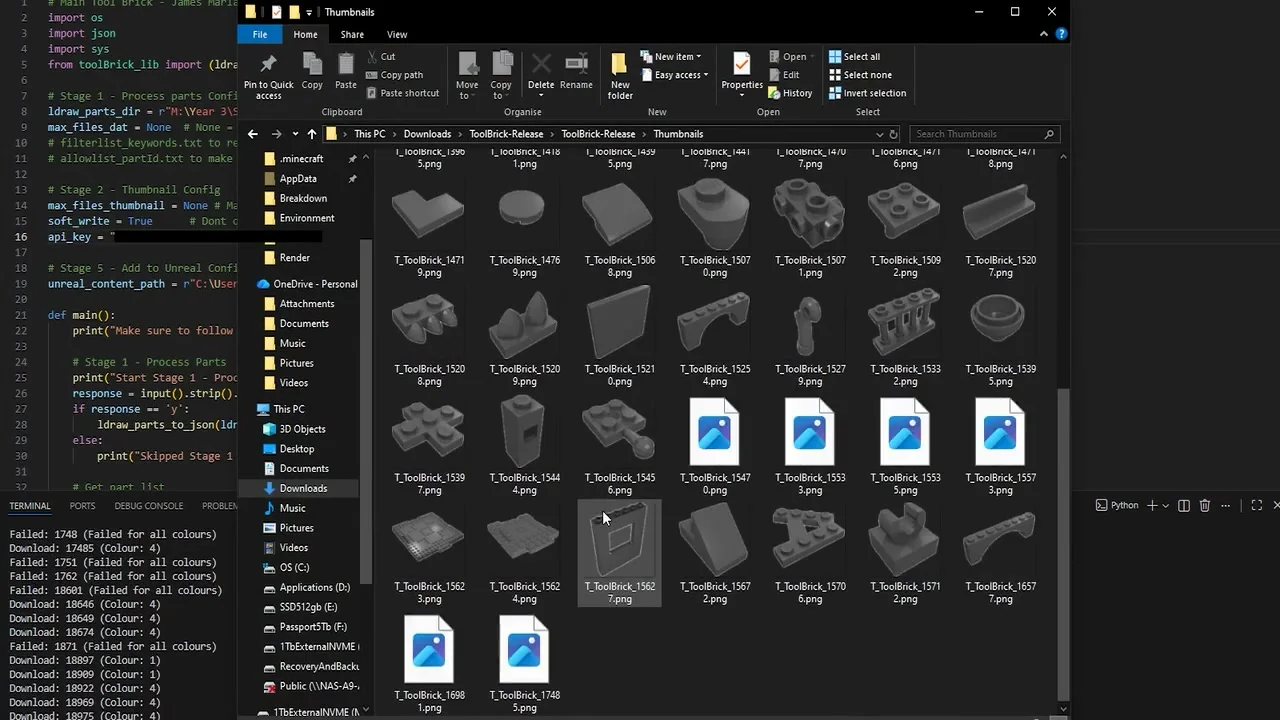
- 01Python and LDraw dataI scripted a filter that sifts LDraw's 23,000+ parts down to 900+ common LEGO parts.
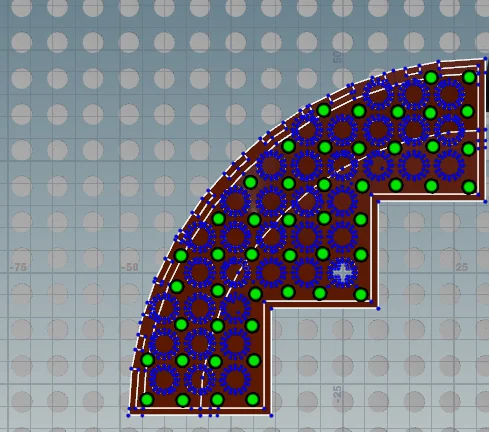
- 02Procedural LEGO partsI used a PDG network to batch generate parts and their stud positions with a raycast algorithm.
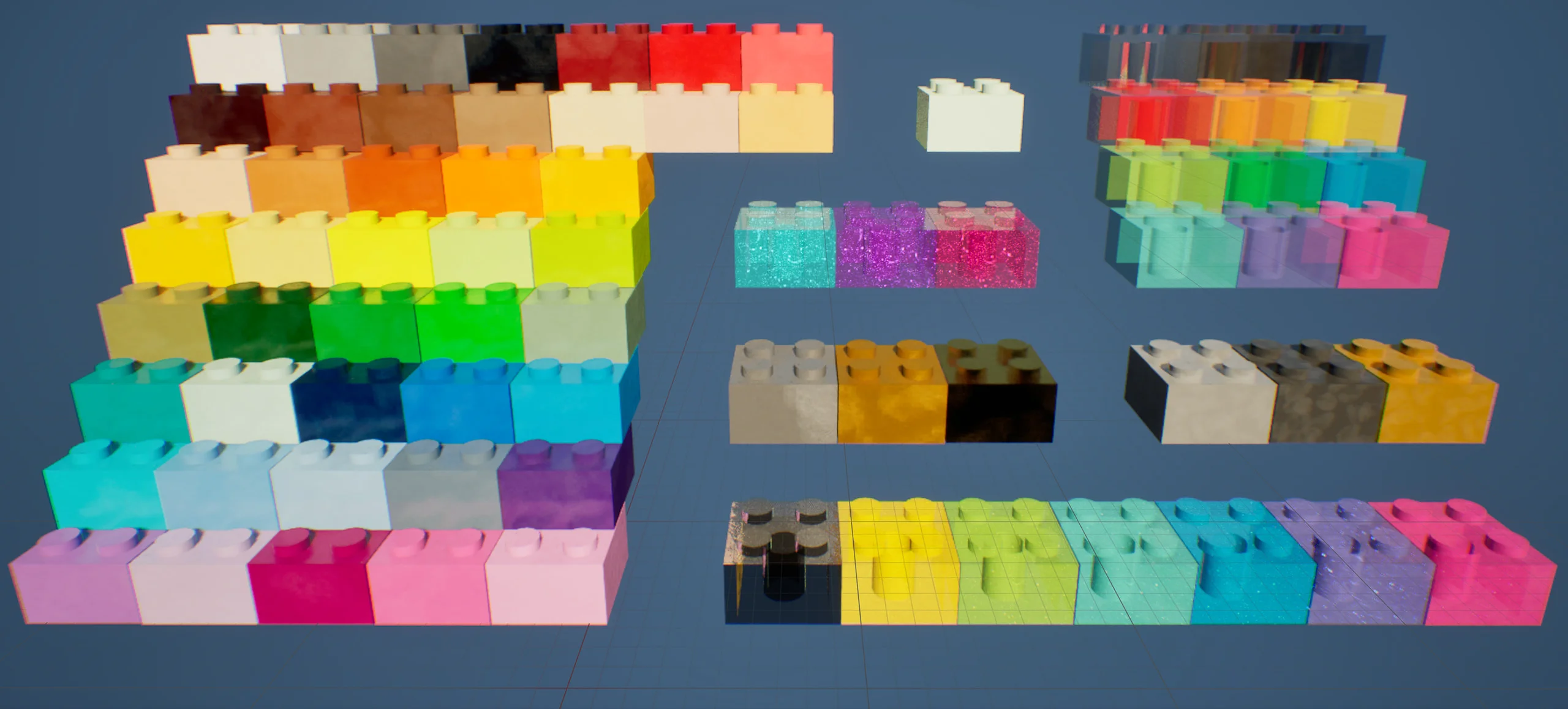
- 03The Unreal toolsetI built an Editor Utility Widget in Unreal to browse, colour, place and snap LEGO parts in the editor.
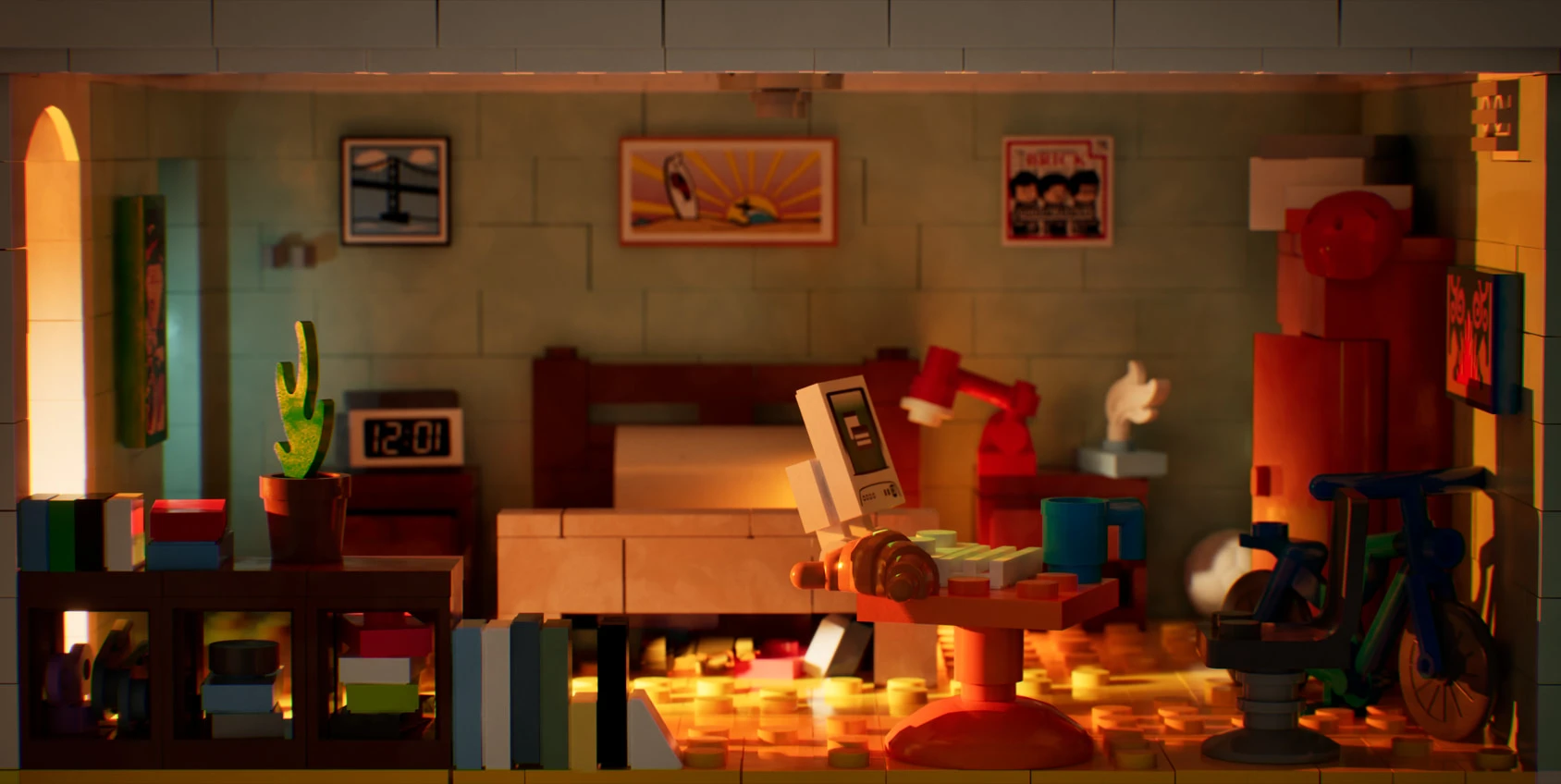
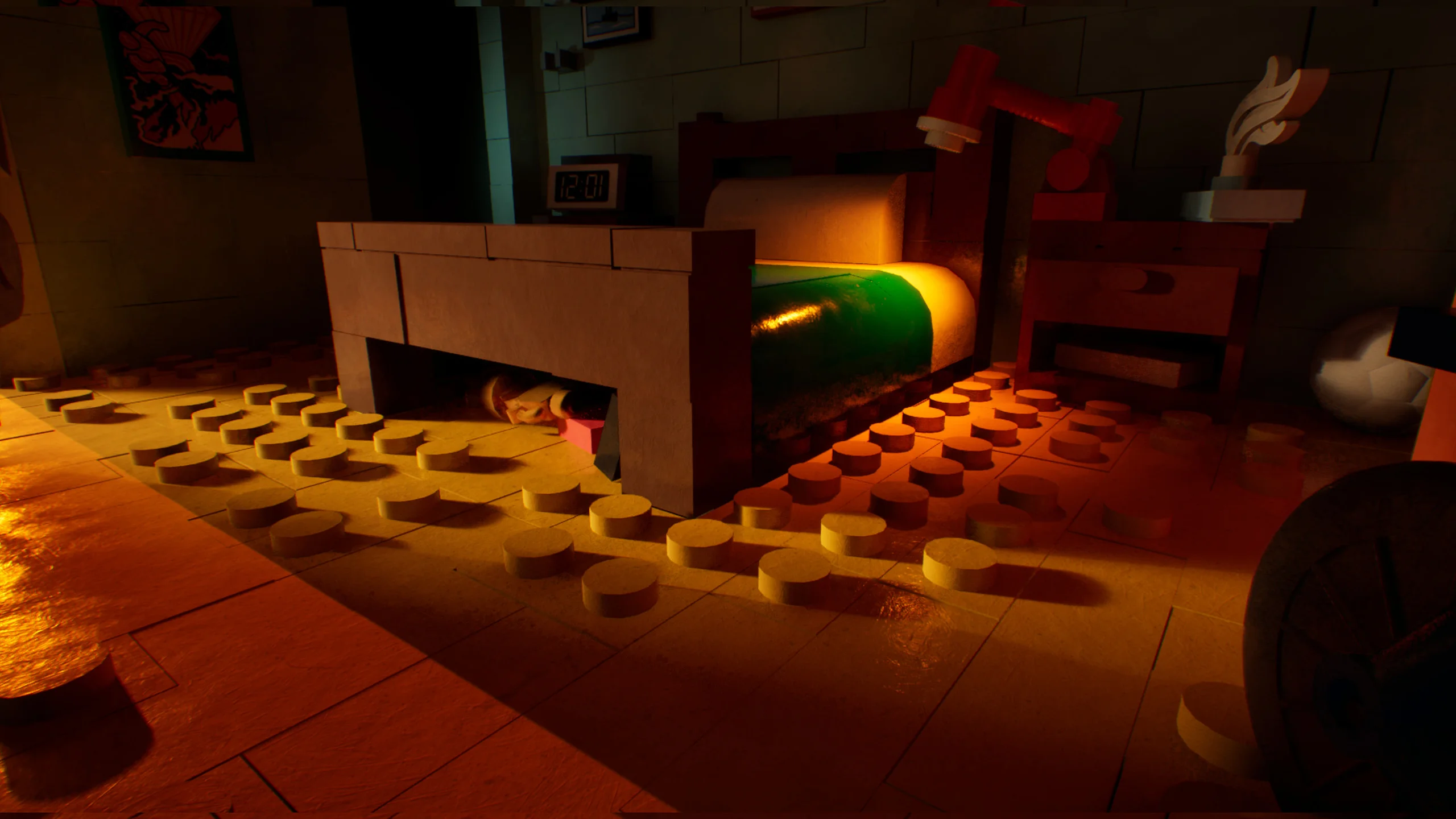
- 04Emmet's apartmentI rebuilt Emmet's apartment from The LEGO Movie brick by brick with my own tool, in 5 hours including lighting and camera.
Overview
Tool Brick is an Unreal Engine 5 tool for building environments out of LEGO bricks inside the editor. I made it over 8 weeks for my final year Advanced Specialism module at Escape Studios and released it on GitHub. It’s aimed at rendered work like brickfilms, but could be adapted for real-time use.
It started as a reaction to LEGO’s brick-by-brick mode in Unreal Editor for Fortnite, which gives you around 50 preset parts and a clean look that suits Fortnite (Epic Games and LEGO Group, 2025). I wanted brick-by-brick control with the realism of The LEGO Movie (The LEGO Movie, 2014) instead, scratches and fingerprints included. Animal Logic built the film’s sets in LEGO Digital Designer (Fxguide, 2015), and my idea as a technical artist was to move that step into the engine, so artists don’t have to export, import and set up parts by hand.
The pipeline uses Python to collect, analyse and sort the LDraw part library, filtering it down to 900+ suitable parts in one JSON part list. A Houdini PDG network then builds every part’s mesh with LDraw2Houdini and raycasts each one to find its studs where possible. In Unreal, an Editor Utility Widget lets artists search the parts, pick from 73 colours and snap bricks together by their studs, with every brick slightly scaled and offset so the build isn’t too perfect.
To finish, I used the tool to rebuild the bedroom of Emmet’s apartment from The LEGO Movie part by part, which took 5 hours including the lighting and render work.
Download
Everything is on GitHub under a CC BY-NC 4.0 licence, including an Unreal 5.5 project with the tool, the generated part library and the showcase level. You can also download my full written breakdown.
The showcase walks through the browser, colours, snapping, the test levels and the apartment.
The setup guide runs through every Python stage on camera.
Reflections
I hit every goal I set myself at the start, from the editor tool through to an environment built with it. The biggest weakness was building it all in Blueprint. Editor utilities and JSON handling were difficult to do, as support for them was lacklustre, and I often hit limitations and kept having to write workarounds. Written in C++, it would probably have been a smaller tool, but a much better integrated one.
If I came back to it, I’d move the snap handles inside the brick as components, and generate parts on request through Houdini Engine or similar instead of baking the whole library up front, so there’s no friction outside the engine. I’d add support for importing the common LEGO set formats straight into Unreal: LDraw’s .ldr and .mpd, BrickLink Studio’s .io and Mecabricks’ .zmbx. I’d also like to build the smaller tools I dropped from my original brief to focus on the core, like placing fences, rocks and walls from a few settings instead of brick by brick.
Credits and legal
Tool Brick wouldn’t have been possible without LDraw (LDraw.org, 2002) and Stefan Müller’s LDraw2Houdini (Müller, 2023). The thumbnails come from Rebrickable, the surface textures in the master material are credited on the Unreal toolset page, and everything else is credited on the project’s GitHub.
Tool Brick is released under the CC BY-NC 4.0 licence.
LEGO® is a registered trademark of the LEGO Group, which does not sponsor, endorse or authorise this tool. Visit the official LEGO website at lego.com.
Sources
Epic Games and LEGO Group (2025). The LEGO® System in Play Expands with Brick-by-Brick Building and More Customisation Options Coming to Unreal Editor for Fortnite. [online] LEGO.com. Available at: https://www.lego.com/en-us/aboutus/news/2025/june/updates-unreal-editor-for-fortnite [Accessed 23 Nov. 2025].
A big inspiration for brick-by-brick building, but lacked the control I wanted to have.
Fxguide (2015). Brick-by-brick: How Animal Logic Crafted the LEGO Movie. [online] Fxguide. Available at: https://www.fxguide.com/fxfeatured/brick-by-brick-how-animal-logic-crafted-the-lego-movie [Accessed 23 Nov. 2025].
How the film's sets were built in LEGO Digital Designer, the workflow Tool Brick moves into the engine.
LDraw.org (2002). LDraw.org Homepage. [online] Available at: https://www.ldraw.org/ [Accessed 23 Nov. 2025].
The part library everything is built from.
Müller, S. (2023). ldraw2houdini: Import LDraw Files Directly into Houdini. [online] GitHub. Available at: https://github.com/stefanmuller/ldraw2houdini [Accessed 23 Nov. 2025].12
The HDA that turns LDraw part files into meshes.
The LEGO Movie (2014). Warner Bros. Pictures.
The look I was aiming for, and the source of the showcase set.