June 2025
Borderline Racing
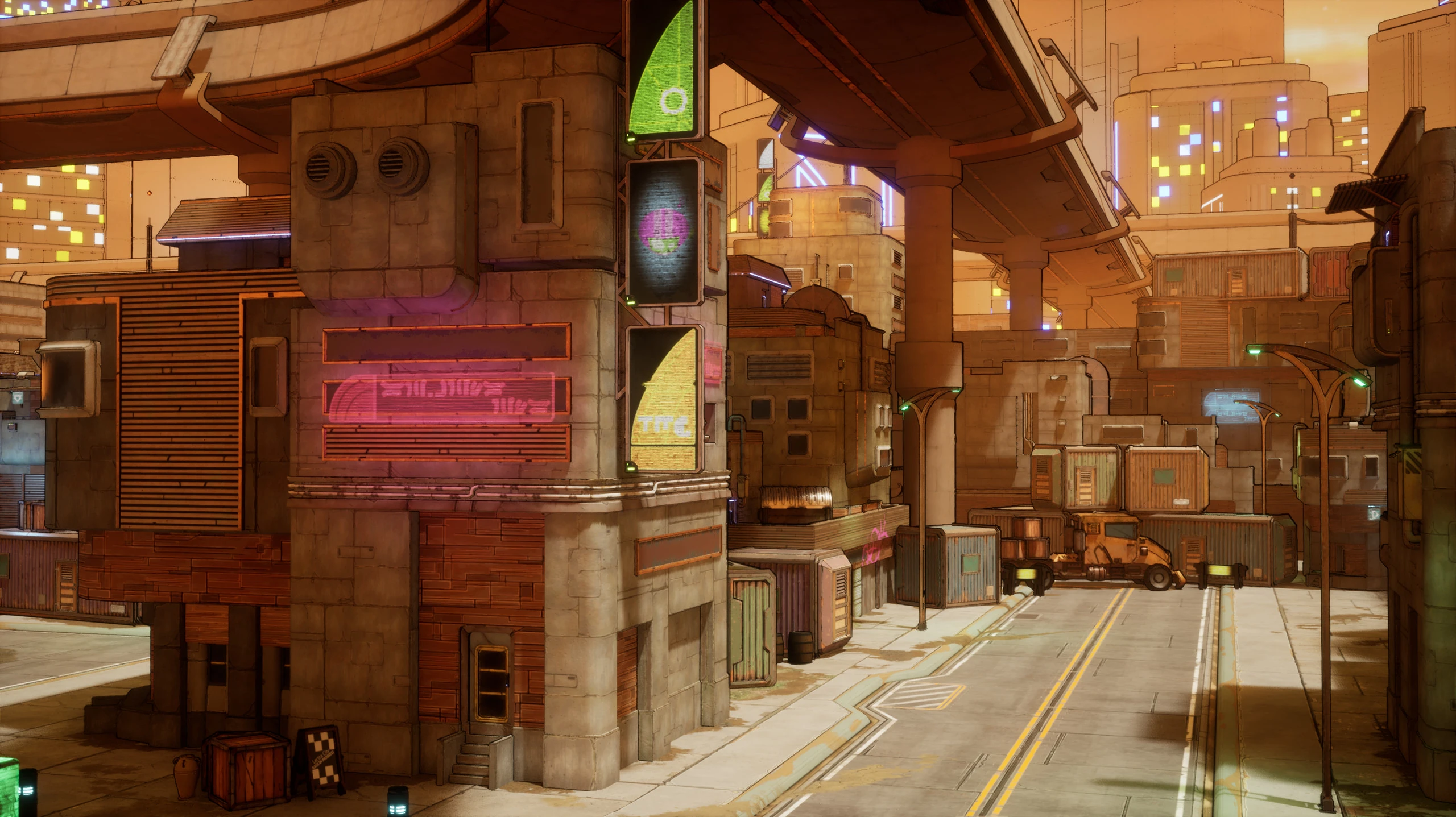
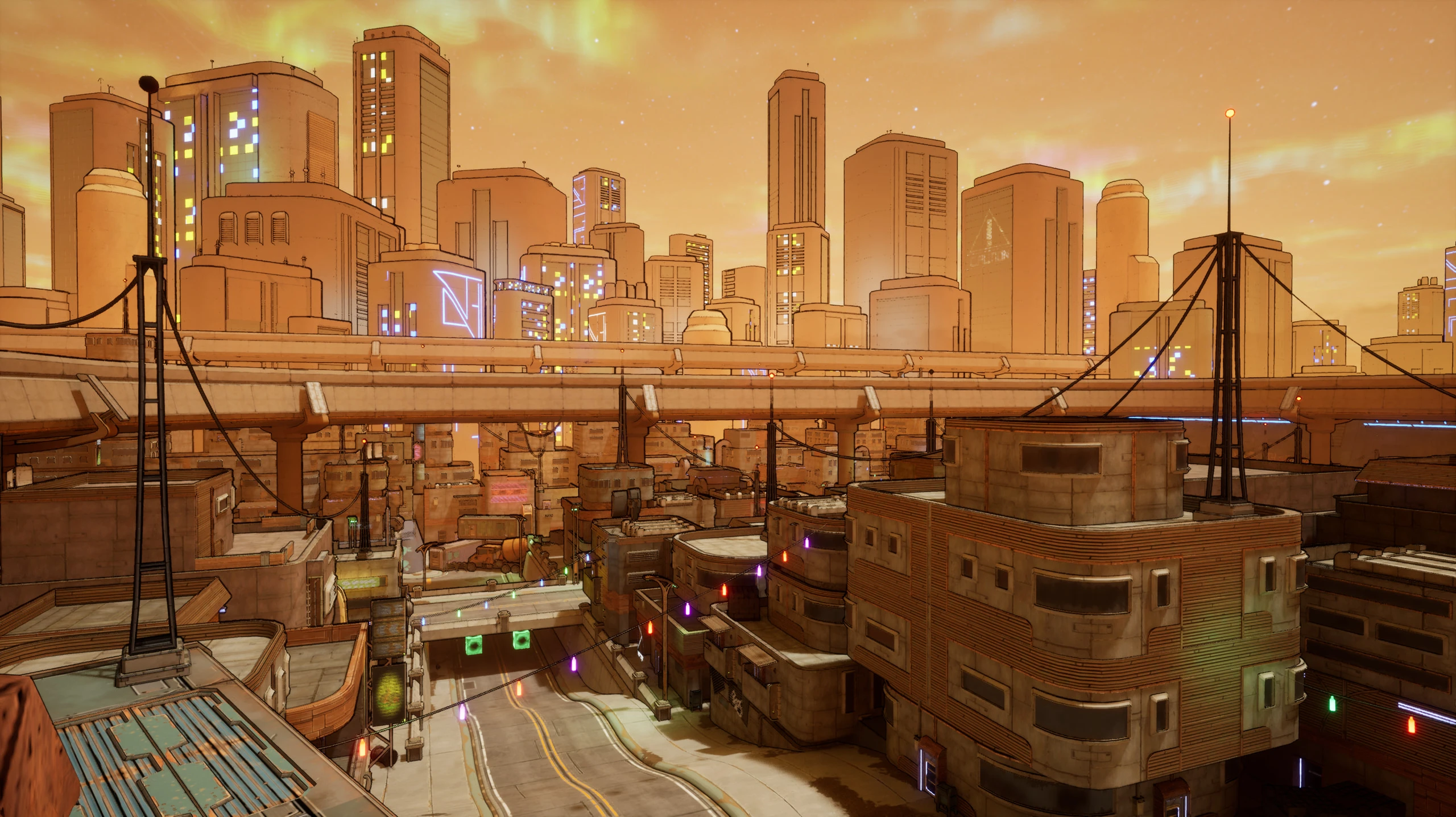
I produced this 11-person Borderlands racer and built its outline shader, VFX and more.
Breakdowns
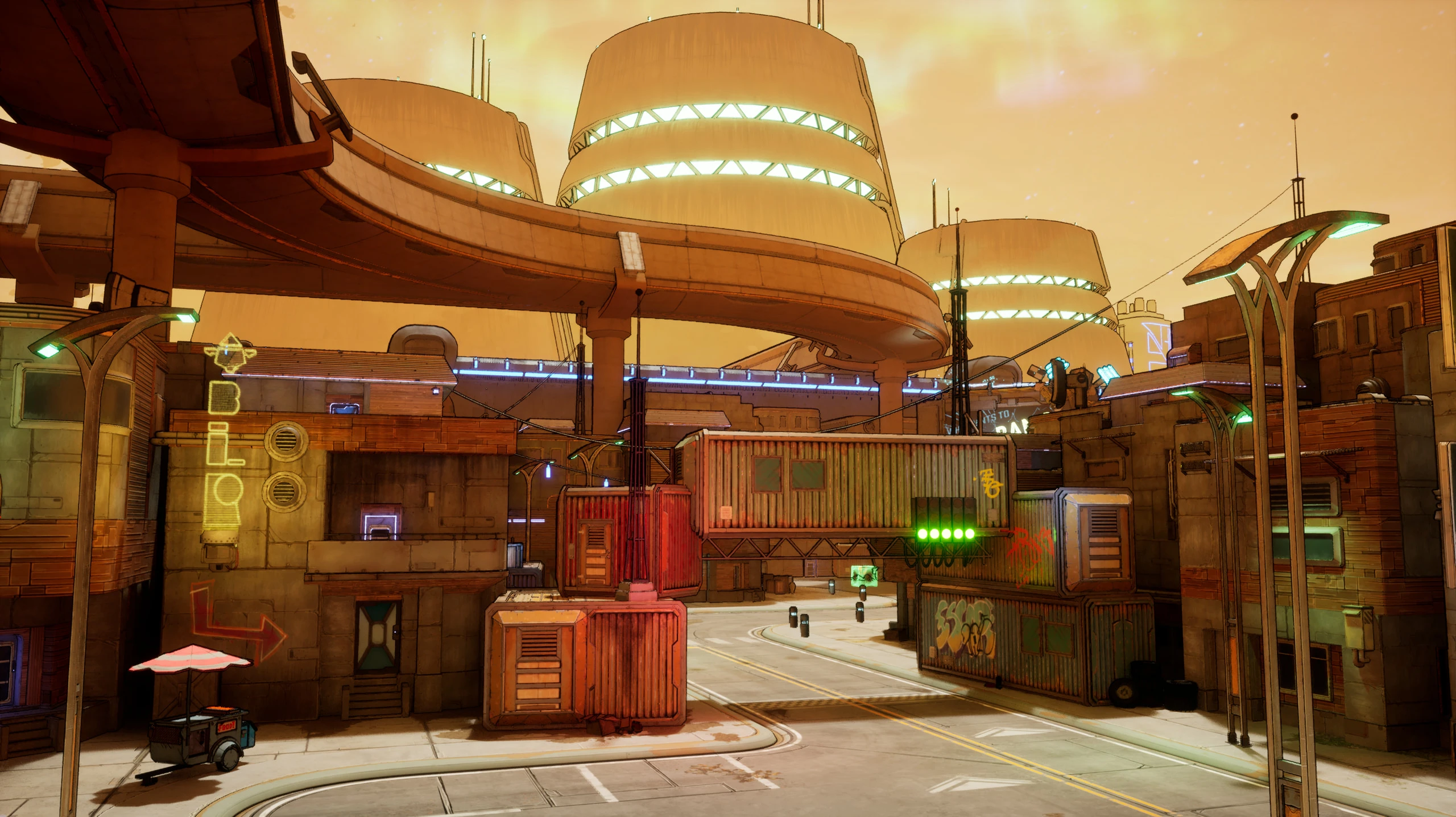
- 01Outline shader and VFXI recreated the iconic ink outline with a post-process as well as every VFX in the game.
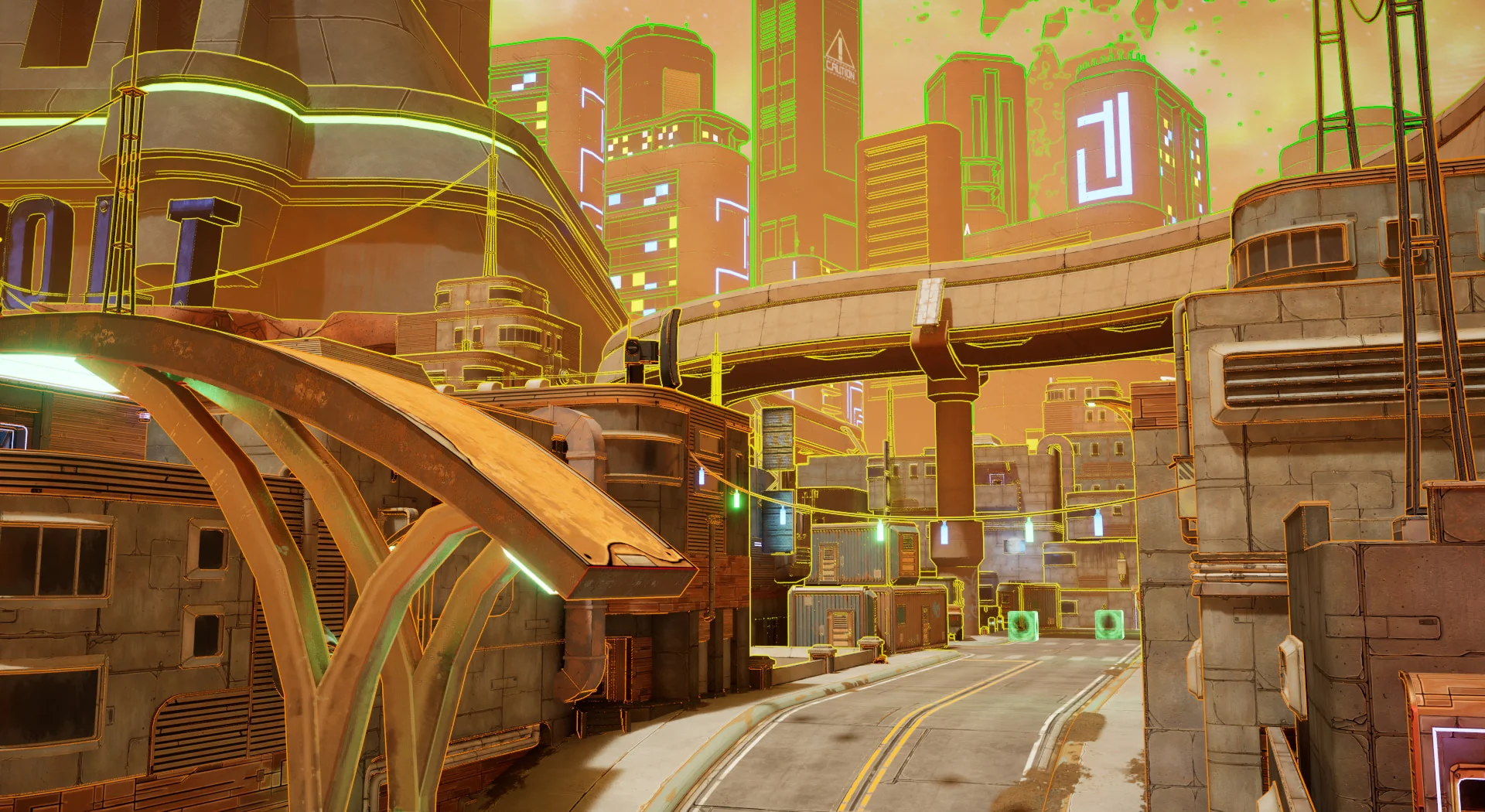
- 02Master materialsI made every master material in the game, including neon holo signs and vertex paint blends broken up with world space noise.
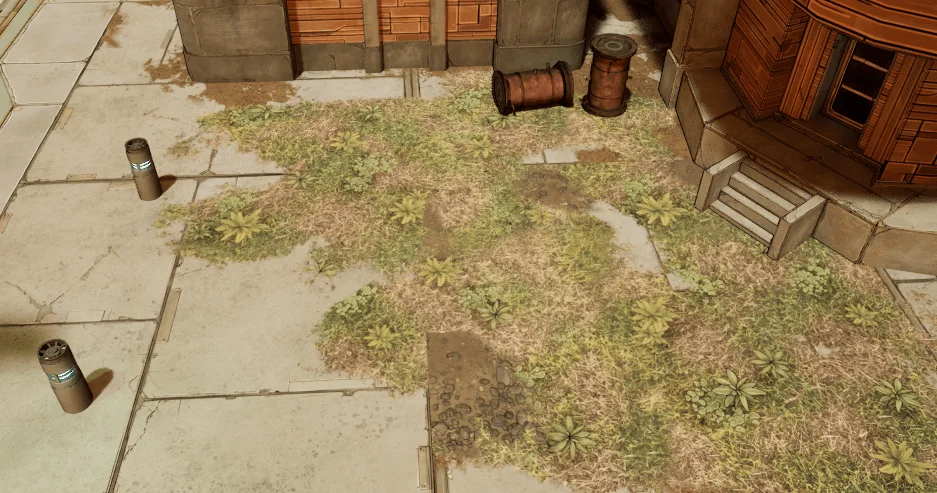
- 03Artist toolsI built tools for artists based on their requests, scaling and iterating on each tool based on feedback.
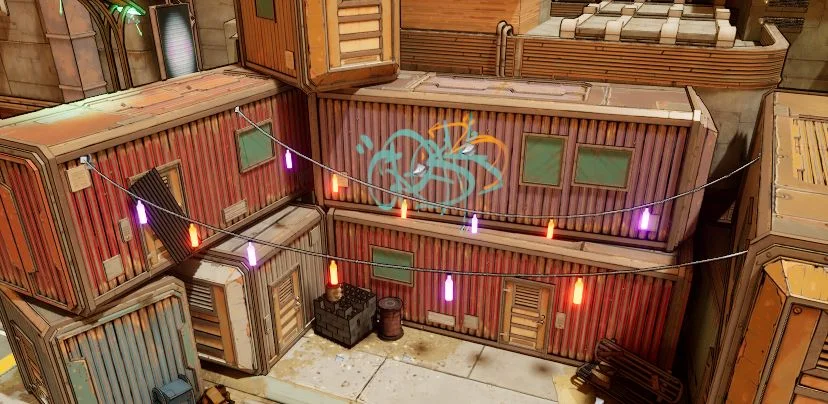
- 04Gameplay programmingI programmed the parts system, made all item behaviour and reworked the vehicles to use arcade physics.
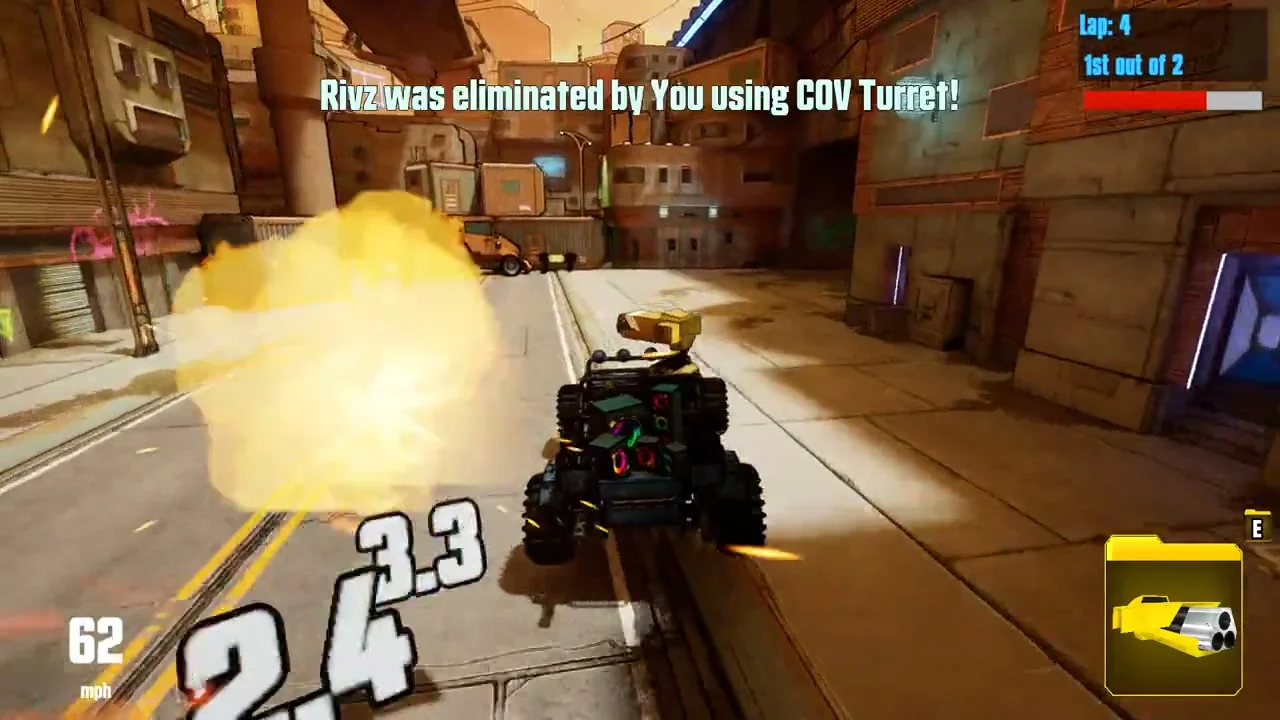
- 05Producing a team of 11I produced the 11-person team behind Borderline Racing, running the weekly SCRUMs, the schedule, playtest feedback and every build of the game.
Overview
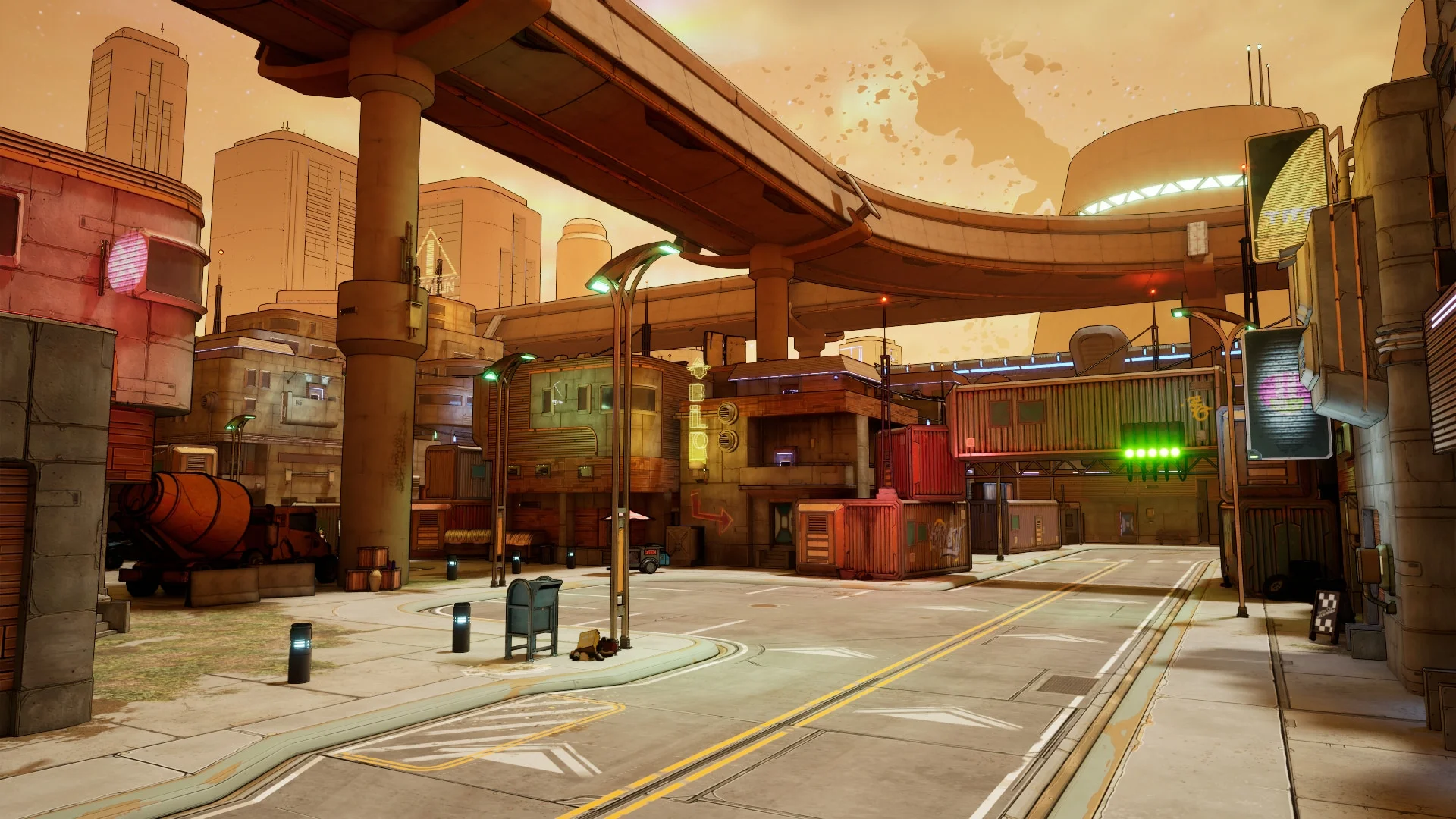
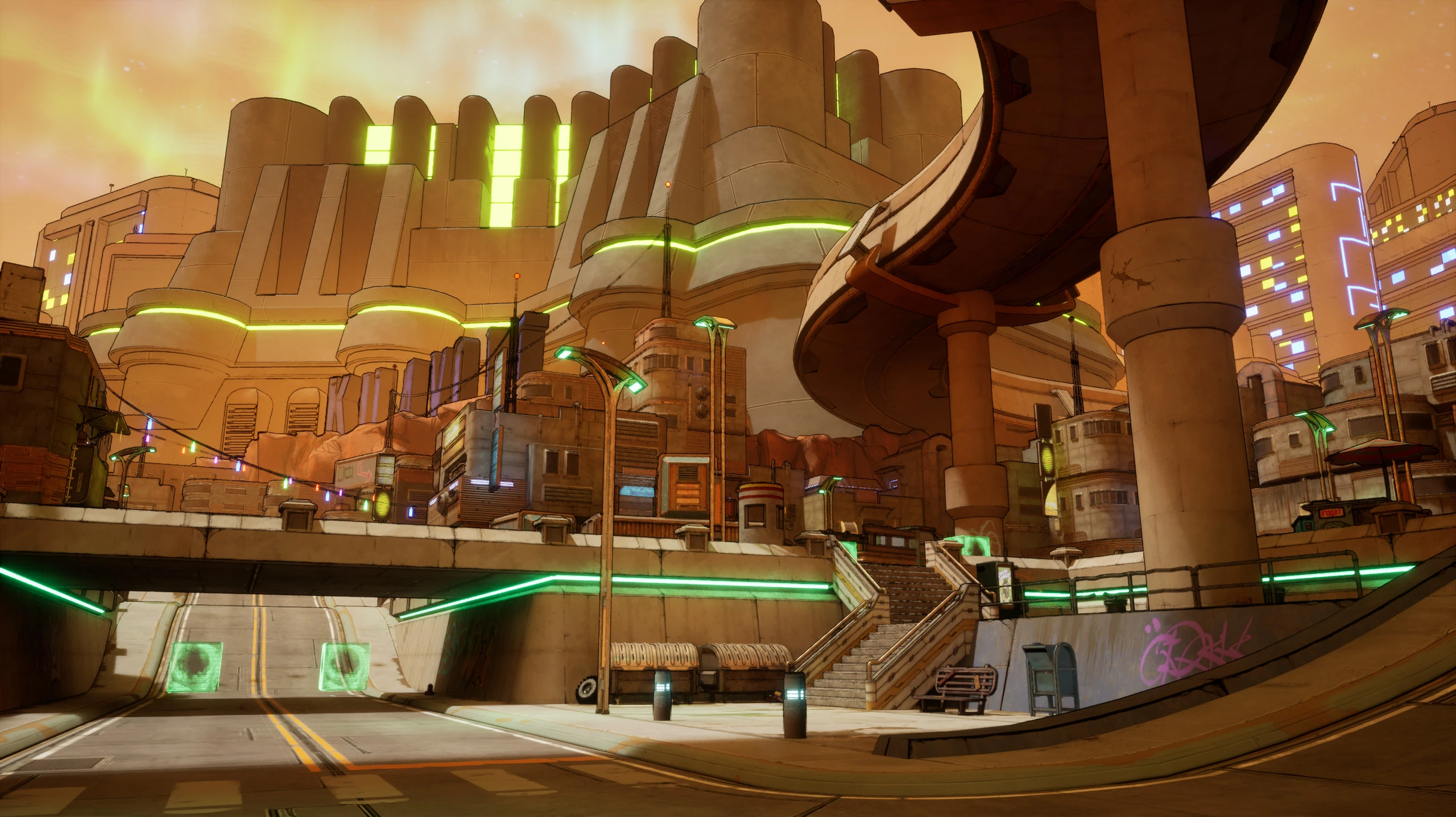
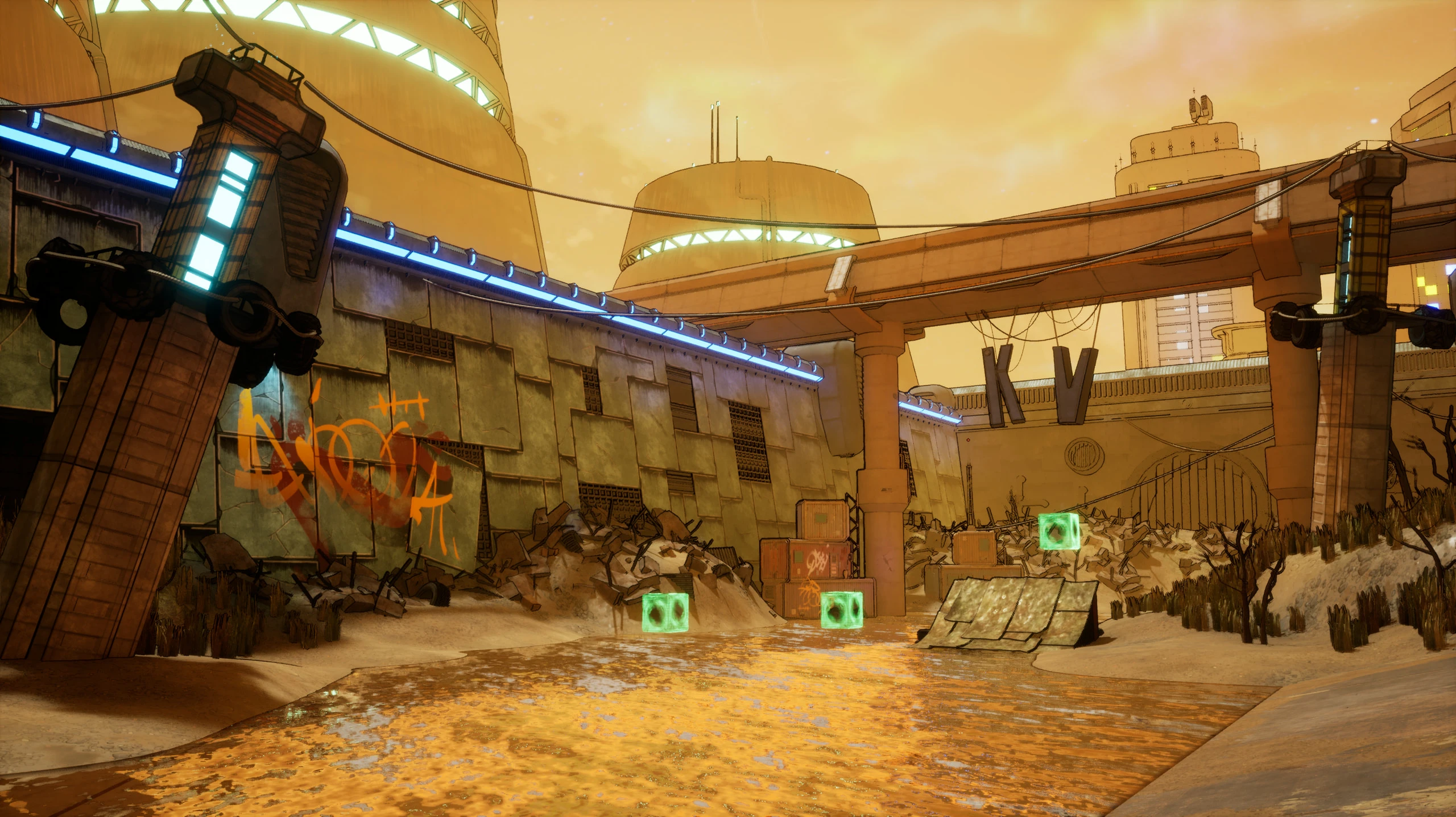
Borderline Racing was my Year 2 group project at Escape Studios. The brief was a vertical slice of a racing game based on an existing AAA game, made in Unreal Engine 5.4. Our team picked Borderlands 3 (Gearbox Software, 2020) for its unique inked art style and chaotic gameplay, and recreated one of its areas, Lectra City.
It’s an elimination racer where the last car is knocked out every lap. Cars are built from parts that change how they drive, and a variety of items can be used Mario Kart style.
Alongside producing, I recreated the game’s ink outline as a post-process that finds edges in scene depth and world normals, split into four distance bands with their own thickness. I made all the master materials, including a holo sign built from stackable effects and a vertex paint blend broken up with world-space noise, and every VFX in the game. I also moved the cars onto an arcade physics plugin so a parts system of shells, engines, exhausts and tyres could change their stats at runtime, and built construction script tools for the artists.
It was a finalist for Game of the Year, Console and PC, at The Rookies 2025, after first picking up a draft selection.
Downloads
The retrospective I wrote at the end of the module, and the team’s art bible.
Retrospective (PDF)5.3 MB Art bible (PDF)17 MBCredits
I was Producer, Technical Artist, VFX & Material Artist, and Gameplay Programmer, along with other aspects. The rest of the team’s roles are below:
The team
Modular, Props, Environment, Concept Art
Modular, Props, Environment, Lighting
Vehicles, Props, Hero Props, Environment
Props, Hero Props, Weapons
Characters, UI, Logo
Vehicles, Props
Props
The three external tools used in the project were:
- Arcade Vehicle System by Furious Production
- Ultra Dynamic Sky by Everett Gunther
- 10 Cartoon Smart Materials for Substance Painter by Nina Shaw
Reflections
The art got the most compliments, both in playtests and in our industry feedback sessions. The weakest part is definitely the gameplay despite the improvements to the movement (which is still a big win). It works for a vertical slice, but it doesn’t have the depth we planned in the treatment. We had to cut the secondary and tertiary loops, including levelling up to earn new items and parts, so there isn’t much reason to come back after a few races.
I do feel like part of the weak gameplay was the brief. A racing game limited what we could make and the tools and systems I could build, not to mention racing is a niche genre and is mostly held by a few big franchises for a reason (Gamestats, 2025).
I also took on too much. Taking on so many roles led to burnout, and while it worked out over 14 weeks, it was a lot by the end. The number of roles also meant I wasn’t able to dedicate myself to any one role and do it to the level I would want. This, however, did teach me a lesson I brought onwards to Project UMBRAE.
Sources
Gamestats (2025). Top Steam Tags by Sales and Revenue as of 2023 - Games-Stats.com. [online] games-stats.com. Available at: https://games-stats.com/steam/tags/.
Where racing sits by revenue on Steam.
Gearbox Software (2020). Borderlands 3 on Steam. [online] store.steampowered.com. Available at: https://store.steampowered.com/app/397540/Borderlands_3/.
The game's inspiration for visuals and concepts.