Breakdown 5 of 5
Producing a team of 11
I ran the SCRUMs, the schedule and every build for an 11-person team, and planned in the buffer time that kept us on track to the end.
Overview
As producer I ran the SCRUMs, planned the schedule, kept the Trello up to date and turned the feedback from each session into tasks. I also kept the project organised in Perforce and in the engine, and made every build of the game.
Creative decisions were always made as a team, but they needed thinking through, and that was a big part of my job. So was sorting out technical problems and keeping everyone coordinated.
Planning around an MVP
We planned the project around a minimum viable product, getting something playable as early as possible and then iterating on it, with feedback driving the decisions (Rouse, 2020). The most important art and gameplay came first and everything else was built up in layers. For me, that meant a gameplay MVP and the first artist tools, then optimisation and VFX, then a final round of gameplay polish.
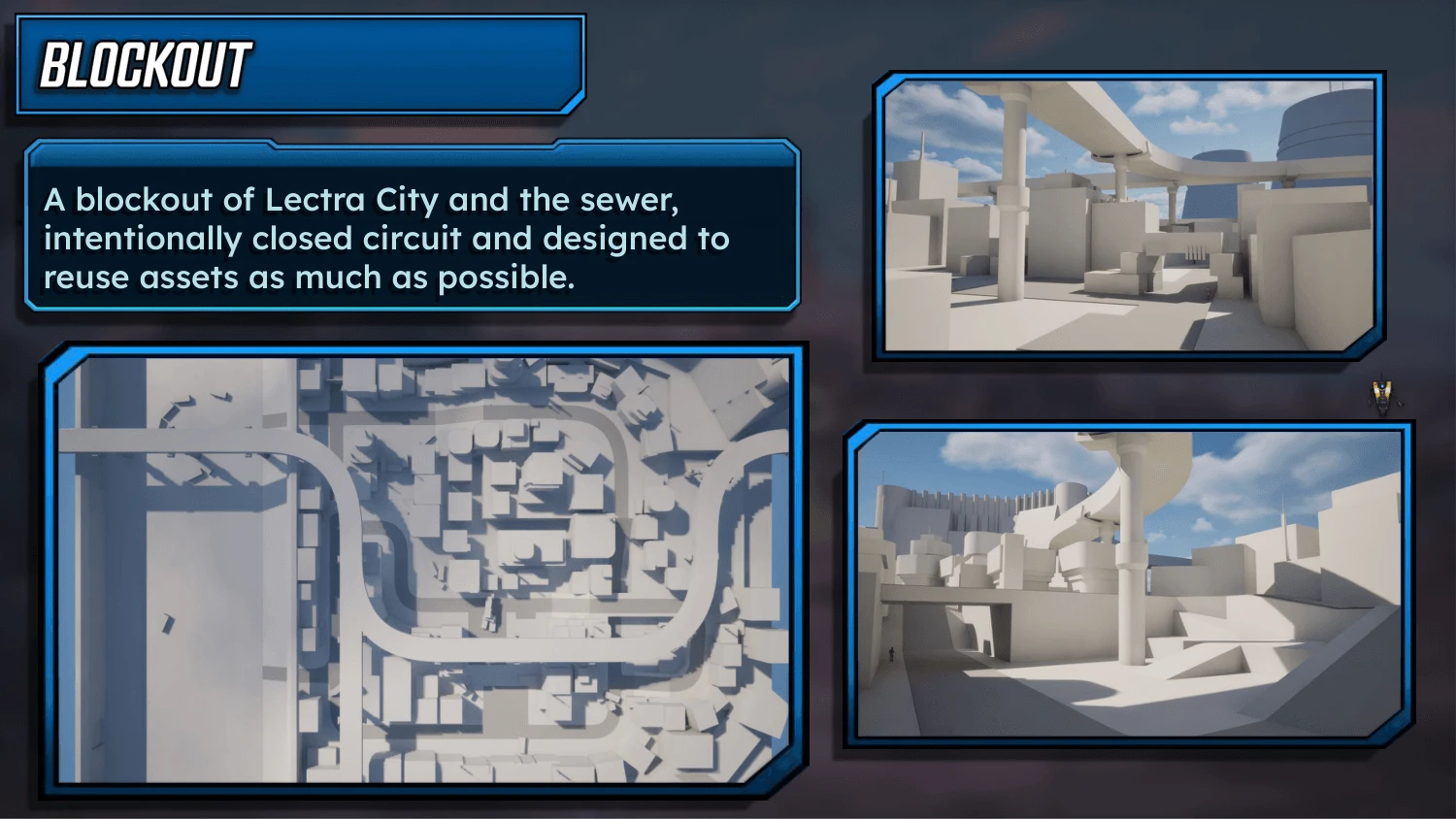
The early gameplay work ran on a grey blockout of the city, and I wrote the art bible’s Blockout slide.
The schedule
The production timeline was a Trello board (Duffy and Vatu, 2024) with a column for each week. Every card was tagged by discipline and had a priority and a status, and the deadlines were on it as deliverables.
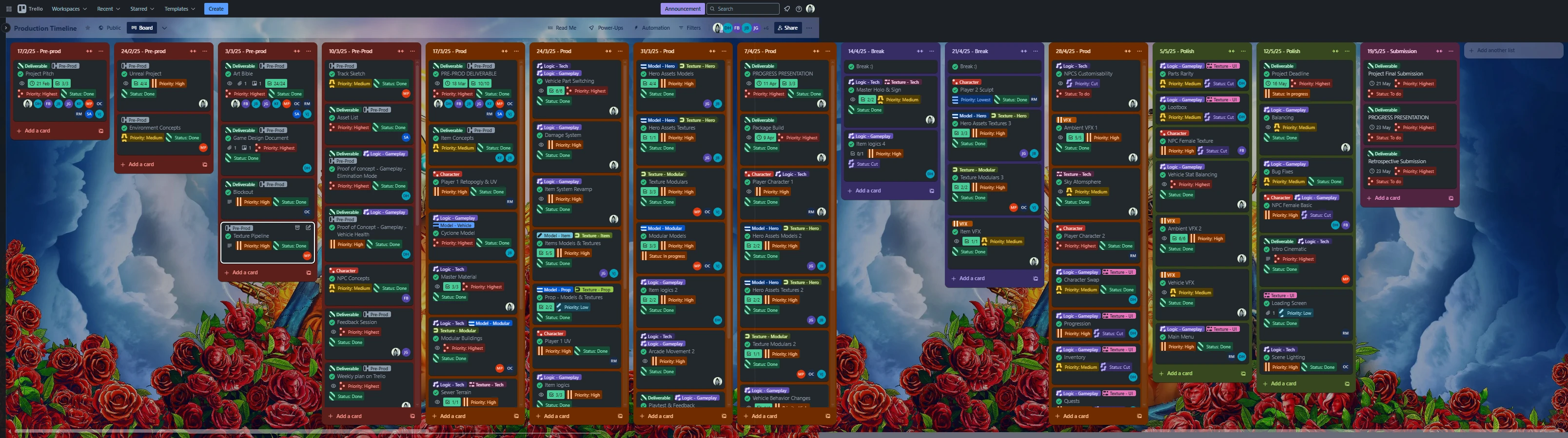
When I planned the project’s scope at the start, I built in buffer time (Doknic, 2024), and it paid off. It gave us room when problems came up, and meant anyone who needed a break could take one.
Towards the end the Trello got crowded, so for the final two-week sprint we switched to one big to-do list on screen for everyone, showing what needed doing and by whom. It suited the pace at the end, when several assets were being finished each day.
Hero:
Joe - Start Lights - Texture
Joe - Bang Sign - Texture
Vid - Powerplant - Model & Texture

Vehicle VFX:
Jamie - Exhaust - Effect
Jamie - Tire dust - Effect
Jamie - Tire marks - Effect
SCRUM and feedback
Every Tuesday I ran a SCRUM to go over what had been done and what was next. Most problems left the meeting with a plan of action, and every member had a say in the decisions.
After each playtest and the industry feedback session, I compiled the feedback and worked it into the following weeks alongside what was already planned. Vehicle physics, the track borders and the layout were all brought forward or added as tasks this way. The biggest example was the driving, which is covered on the gameplay page.
Roles and cuts
Shah and I made the asset list, and its categories decided the first roles. One rule I wrote into them was that as few people as possible should import finished assets into the project, to keep things consistent, and I was one of those people.
The roles were never meant to be fixed, which turned out for the best, since people ended up working across all sorts of tasks.
As the project went on, we decided together in the SCRUMs what to cut and how to share out the remaining work, and a few extension tasks didn’t make it into the final game.
Keeping it organised
I kept the folders, outliner and levels organised the whole way through, and held everyone’s files to the naming conventions in our style guide. The project lived in Perforce, and I kept the depot tidy as well.
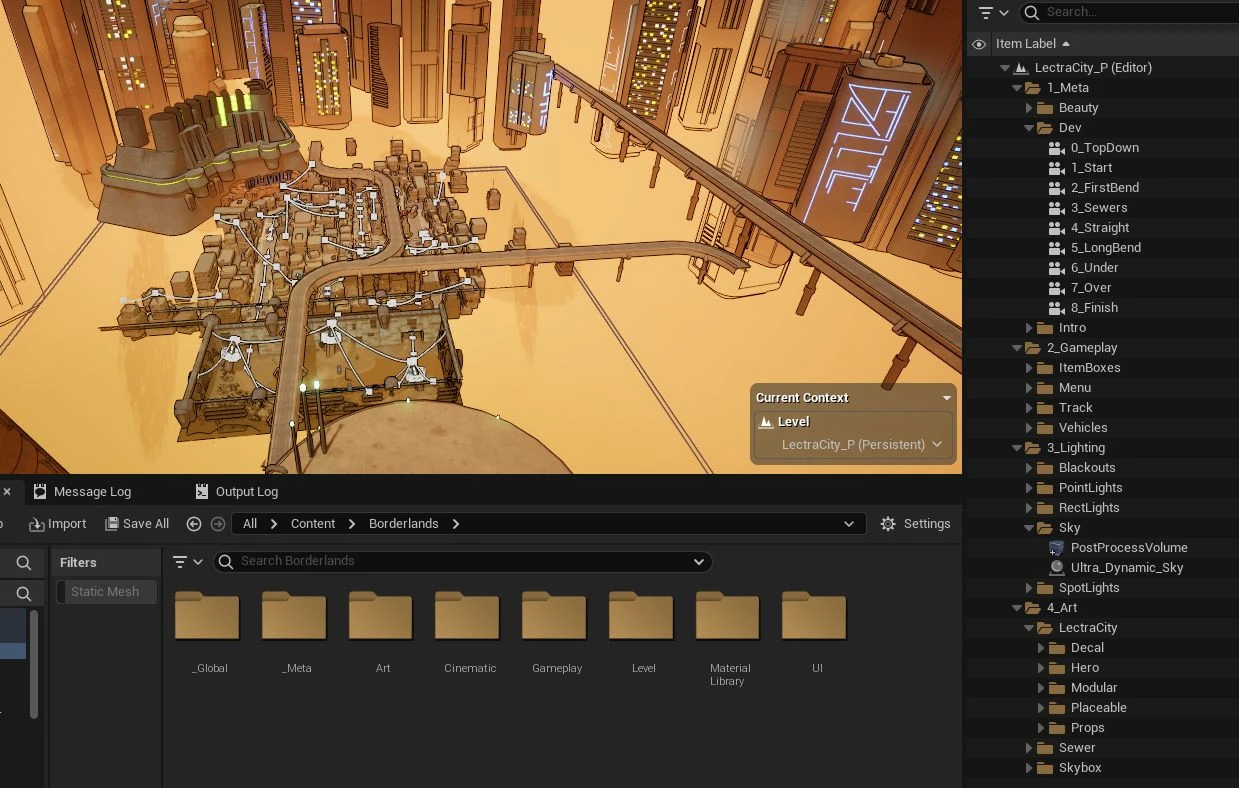
The level is split into sub-levels, with the art ones (ground, props and structures) kept separate from technical ones like audio, gameplay and lighting.
Tracking progress
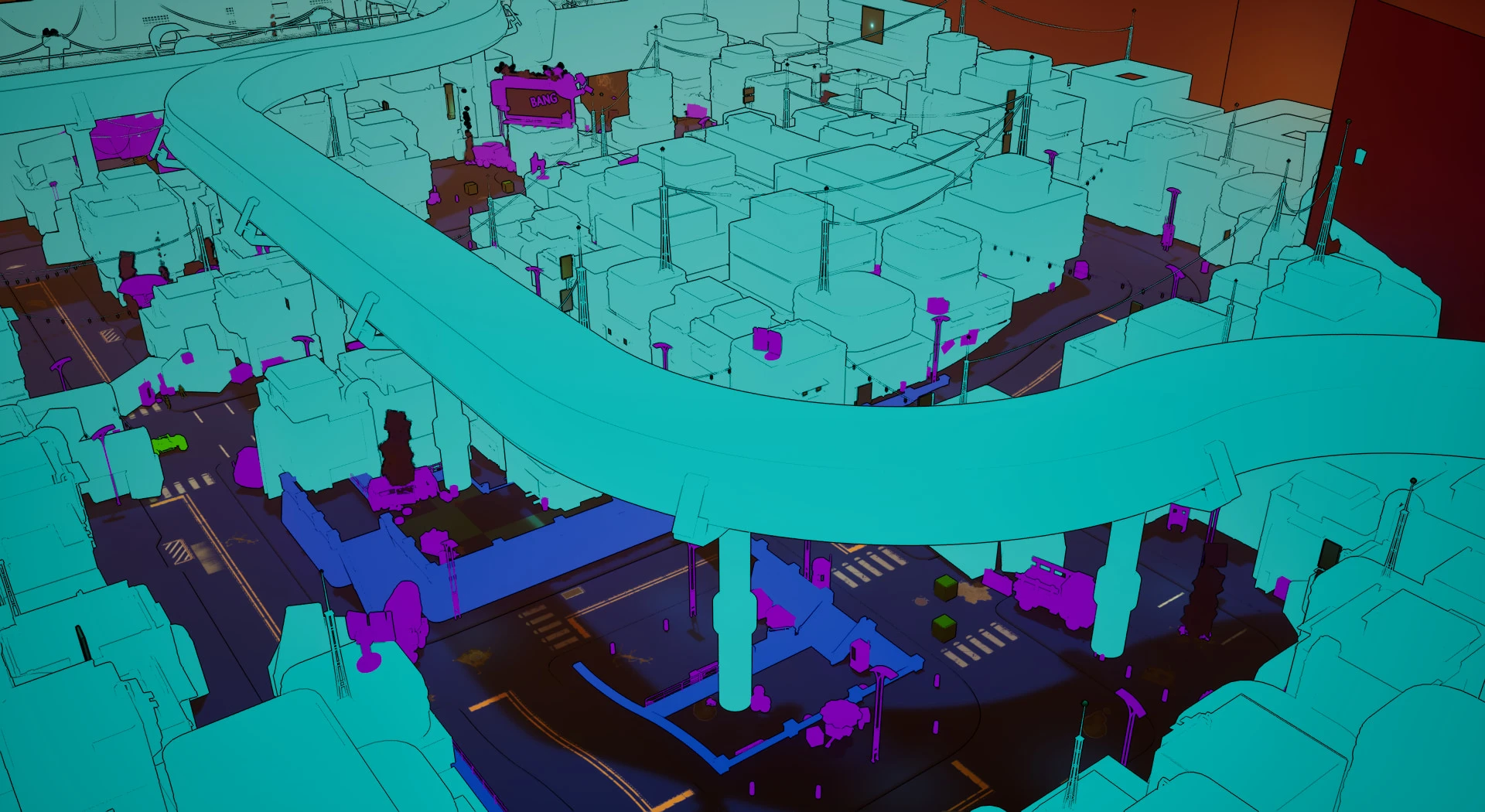
Development screenshots were one of our deliverables, so I set up nine fixed cameras around the track and captured them by hand from the blockout to the end. Because the cameras never move, any two dates line up exactly.
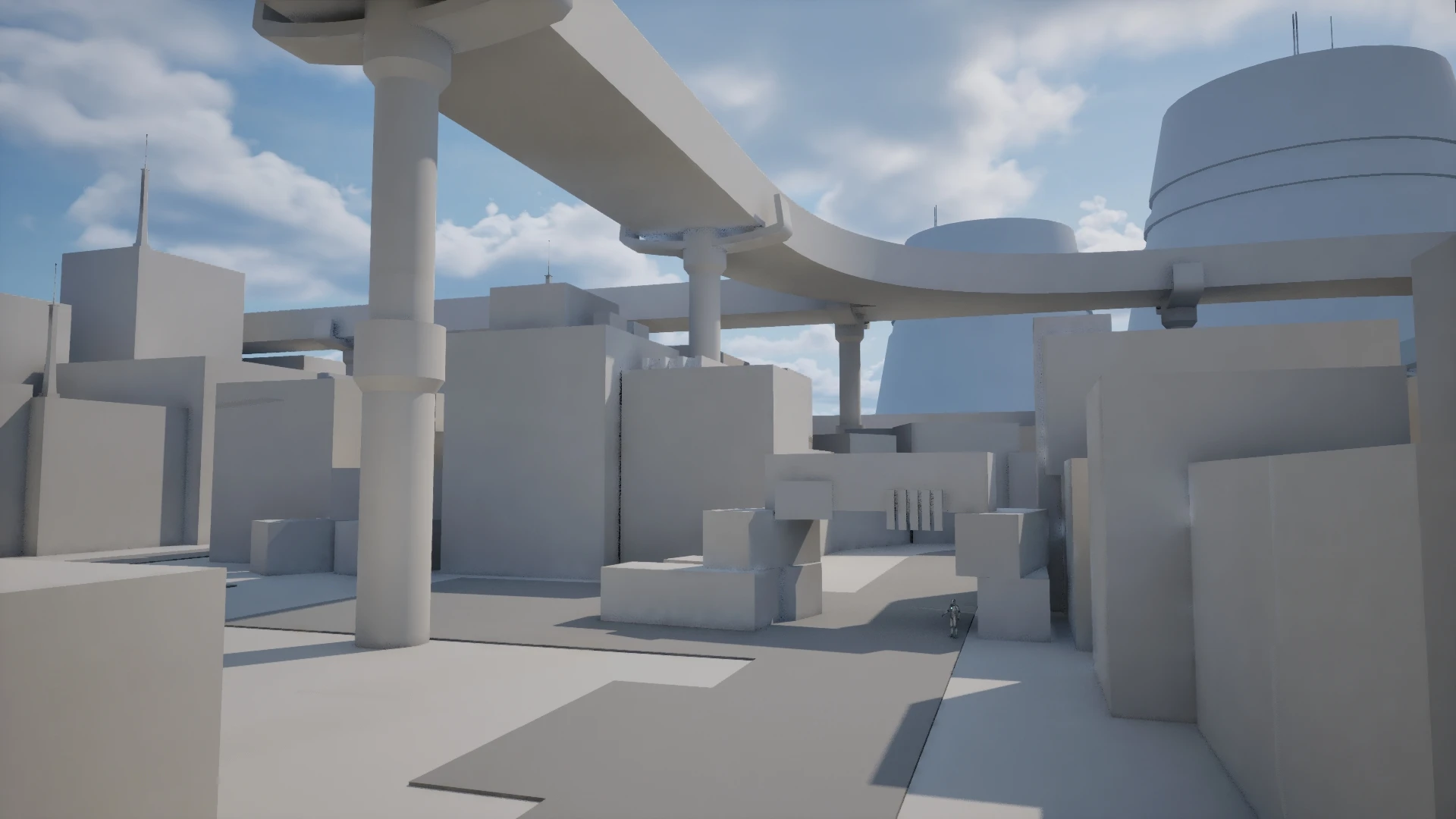
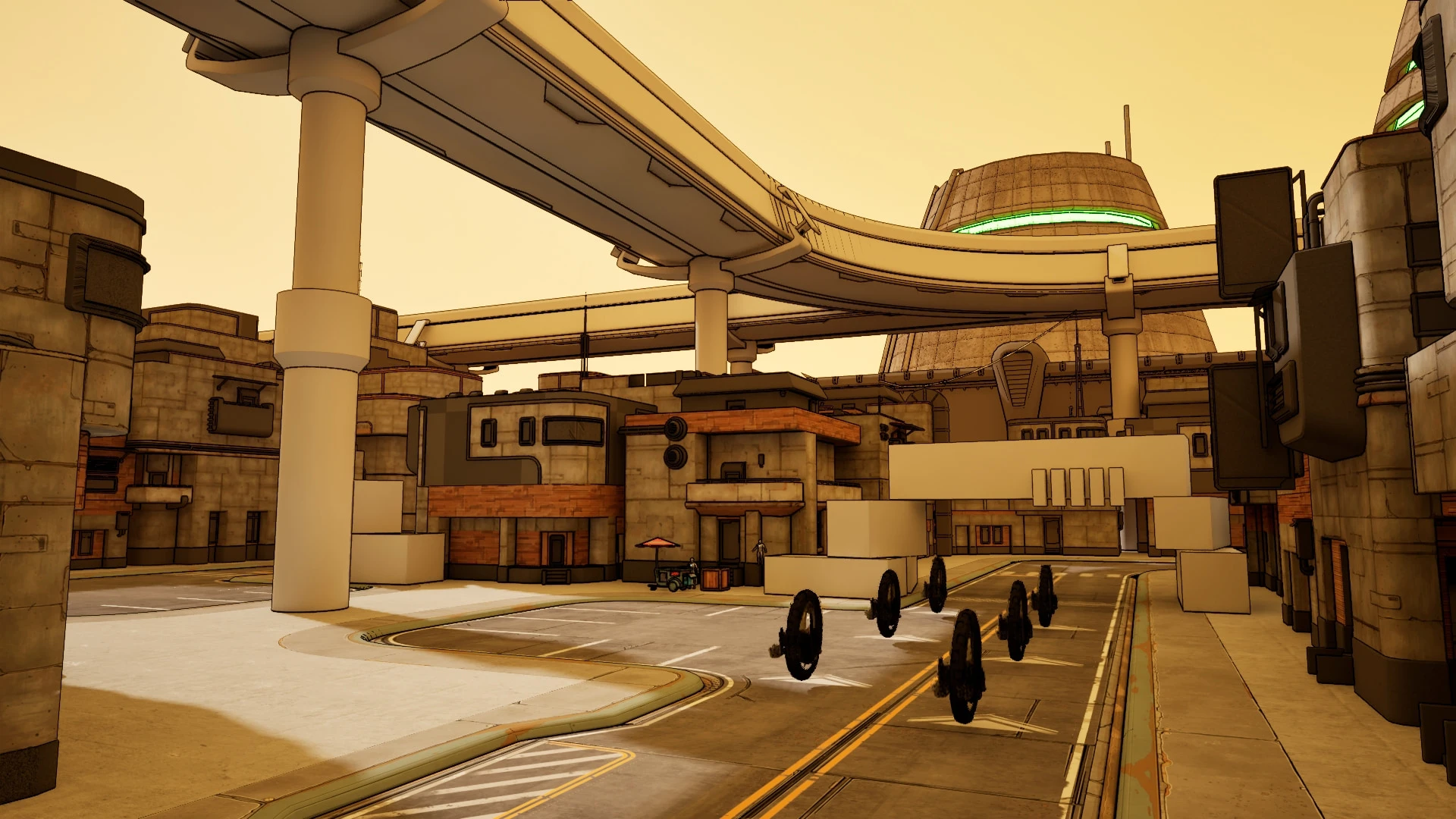
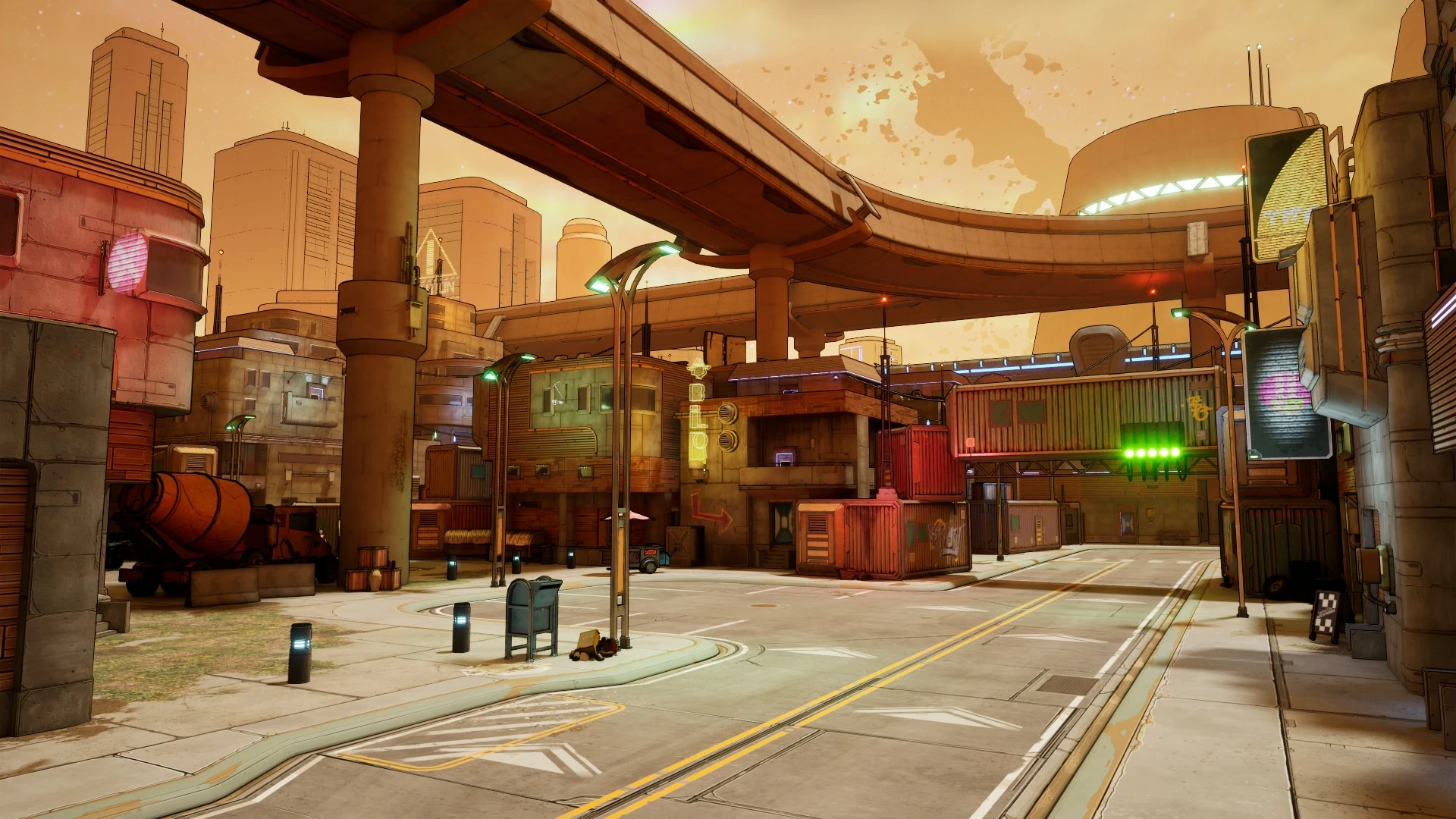 12 Mar9 Apr18 May
At the end, the captures were cut together into a development breakdown.
Reflections
Our planning was one of the highlights of the project, and it meant we didn’t have to scrap much of what we set out to do. The buffer time was worth it too, since it absorbed the delays that came up without overloading anyone.
The one thing I’d change is my own workload. On top of producing, I took on four other roles to carry the weight of the project, and it led to a small amount of burnout. It worked out over 14 weeks, but it wouldn’t be sustainable on a longer project or in industry.
I’m proud of the team, and of being its producer. The next team I produced was Project UMBRAE.
Sources
Doknic, A. (2024). What Is Buffer Time & How to Find Your Sweet Spot | Memtime. [online] Memtime. Available at: https://www.memtime.com/blog/buffer-time.
The buffer time I built into the schedule.
Duffy, J. and Vatu, G. (2024). Trello Review. [online] PCMAG. Available at: https://www.pcmag.com/reviews/trello.
Trello, the tool the production timeline was run in.
Rouse, M. (2020). What Is a Minimum Viable Product (MVP)? - Definition from Techopedia. [online] Techopedia.com. Available at: https://www.techopedia.com/definition/27809/minimum-viable-product-mvp.
The MVP approach we planned the project around.